




Hi, I’m Beryl, and here’s what we do at BestExperts.

BestExperts GmbH
Innovationspark Augsburg
Am Technologiezentrum 5
86159 Augsburg
Helping Tech Companies Grow Smarter, Not Just Bigger.
Feel like your growth is stuck because sales, marketing, and partnerships keep pulling you away from what you actually want to focus on your tech?
You’re not alone. And you don’t have to figure it all out by yourself.
At BestExperts, we help tech-driven companies grow smarter, faster, and with way less stress, especially if you’re entering or expanding in the DACH region. We’ve got 20+ years of business and sales management experience under our belt. But more importantly, we know how to turn complex markets into real opportunities.
We’re not just giving advice, we’re rolling up our sleeves and getting things done with you.
Our Portfolio
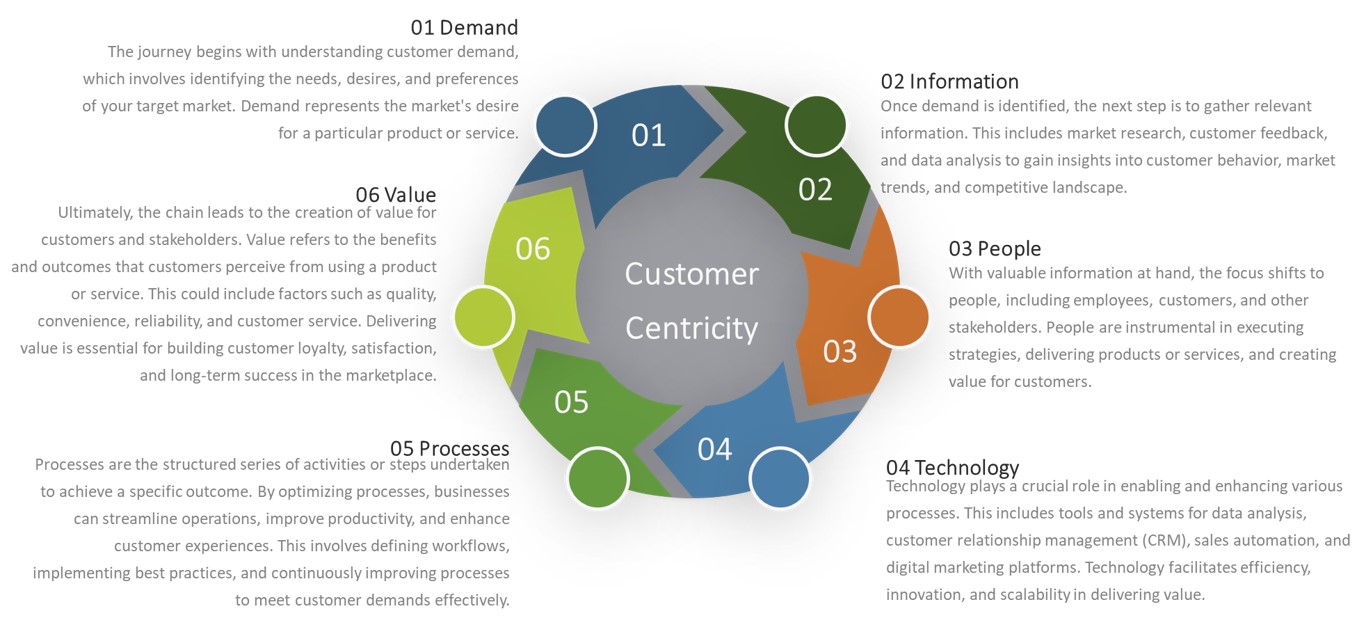
Enhancing CX from Demand to Value
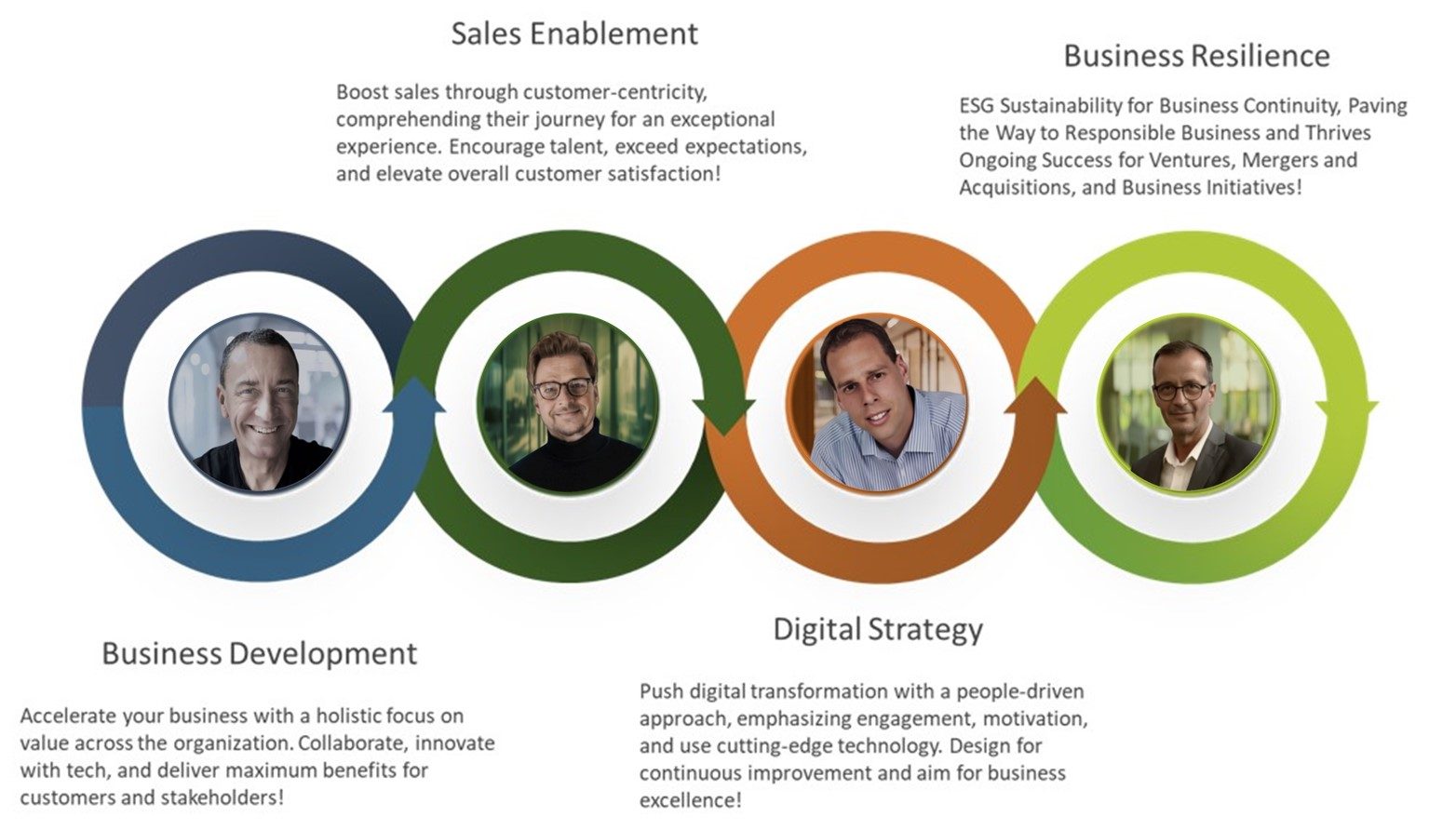
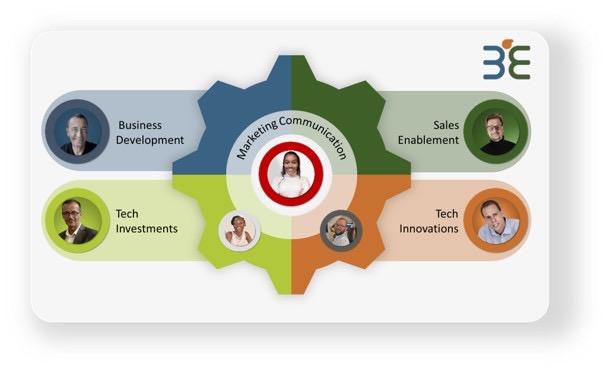
Collaboration among Business Development/Business Relationship Management (BD/BRM), Sales Enablement and Sales Operations, Digital Transformation with People utilizing Technology, and Business Resilience through ESG Sustainability is our Domain.
The Journey
Enhancing CX from Demand to Value
The journey from demand to value is customer-centric and enhances customer experience (CX) by prioritizing needs, leveraging insights and technology for personalized experiences, empowering people to deliver exceptional service, optimizing processes for efficiency in digital transformation, and ultimately delivering value for sustainable business success and resilient excellence.
The Capabilities
Holistic Capability Metrics
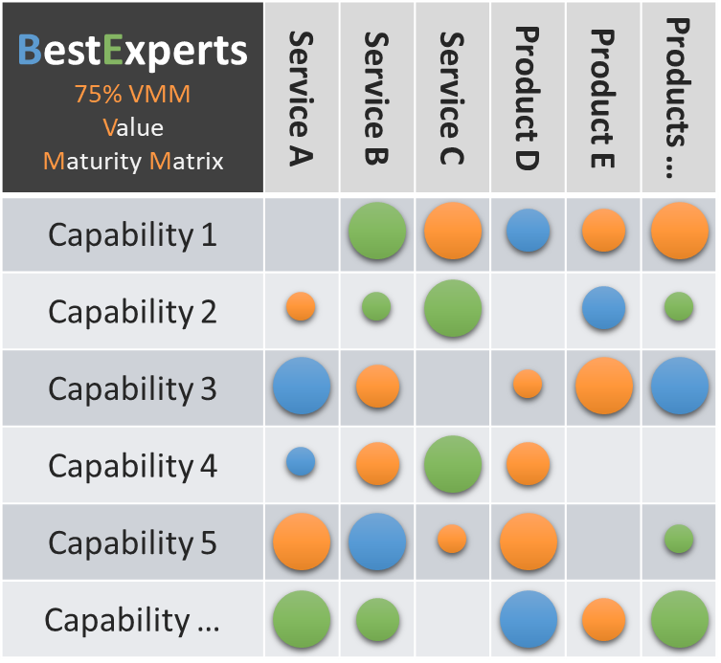
Beyond traditional metrics about costs and revenue, we drive growth and innovation; our performance indicators encompass a comprehensive range of business elements. We gauge the maturity rate of capabilities and capacities across the entire spectrum from demand to value. These sophisticated metrics offer valuable insights into the efficacy of our business development initiatives and sales enablement strategies. They not only drive growth but also fuel the successful launch of portfolios or ventures, while attracting new customers and penetrating new markets.
The Business Maturity Level
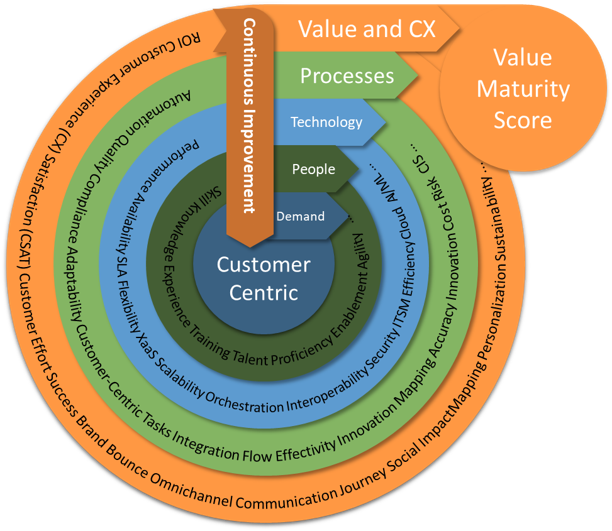
Evaluating Maturity and Capacity
When it comes to assets, we harness a cutting-edge platform to showcase your expertise, services, and innovative solutions within the business and sales organization. Moreover, our approach places a strong emphasis on value-focused business development and customer-centric sales enablement, tailored to the demands, available skills, and capabilities, using technical innovations and digital transformation driven by people, to achieve sustainable business powered by ESG principles and continuous improvement.
Business Use Cases

Business Development
- Conduct market research and analysis to identify new business opportunities and growth areas.
- Develop strategic partnerships and alliances to expand market reach and access new customer segments.
- Design and implement innovative marketing campaigns to generate leads and increase brand awareness.
- Create customized business development plans tailored to specific industry sectors or geographic regions.
Business Relations
- Establish and nurture strong relationships with key clients and stakeholders to enhance loyalty and trust.
- Implement customer feedback mechanisms to gather insights and improve service delivery.
- Organize client appreciation events and networking opportunities to strengthen relationships.
- Provide ongoing support and assistance to clients to ensure their needs are met and exceeded.

Portfolio Alignment
- Analyze market trends and customer preferences to align product or service offerings with market demand.
- Conduct competitive analysis to identify gaps and opportunities in the market.
- Develop product positioning strategies to differentiate offerings and appeal to target customers.
- Continuously monitor market dynamics and adjust portfolio strategies accordingly to stay ahead of the competition.
Sales Use Cases

Market Penetration
- Develop targeted sales strategies to penetrate new markets and acquire new customers.
- Customize marketing messages and sales pitches to resonate with local market preferences and cultural nuances.
- Leverage digital marketing channels and social media platforms to reach and engage potential customers.
- Establish partnerships with local distributors or resellers to increase market coverage and penetration.

Sales Enablement
- Provide sales teams with training and resources to effectively communicate product features and benefits.
- Develop sales collateral and tools to support the sales process, such as presentations, case studies, and product demos.
- Implement sales automation tools and CRM systems to streamline sales workflows and improve productivity.
- Conduct regular sales coaching sessions to reinforce best practices and drive performance improvement.

Sales Management
- Recruit and onboard top sales talent aligned with company values and culture.
- Set clear sales targets and performance metrics to measure individual and team performance.
- Provide ongoing support and coaching to sales teams to help them achieve their goals.
- Foster a collaborative and supportive team environment to maximize morale and motivation.
Tech Use Cases

New Technologies
- Integrate artificial intelligence and machine learning algorithms into sales forecasting models to improve accuracy.
- Implement blockchain technology to enhance transparency and trust in business relationships.
- Utilize virtual reality and augmented reality tools for immersive product demonstrations and customer experiences.
- Adopt chatbots and natural language processing for personalized customer interactions and support.

Business Operations
- Optimize business processes and workflows to improve efficiency and productivity.
- Implement business forecasting and pipeline management systems to track performance and identify growth opportunities.
- Streamline order management and fulfillment processes to ensure the timely delivery of products and services.
- Monitor and analyze business data to identify trends and insights for strategic decision-making.

Digital Transformation
- Develop and implement digital strategies to modernize business processes and enhance customer experiences.
- Adopt cloud-based technologies to improve the scalability and flexibility of the IT infrastructure.
- Implement data analytics tools to gain insights into customer behavior and preferences.
- Leverage emerging technologies such as artificial intelligence and machine learning to automate repetitive tasks and improve operational efficiency.
Projects Use Cases

Protecting Investments
- Conduct thorough financial analysis and ROI assessments to prioritize investment opportunities.
- Develop comprehensive business cases and strategic plans to justify investment decisions.
- Evaluate potential risks and uncertainties associated with investment projects and develop mitigation strategies.
- Monitor and track investment performance against established goals and milestones.

Business Continuity
- Develop robust contingency plans and disaster recovery strategies to minimize disruptions to business operations.
- Implement business continuity management systems to identify and address potential vulnerabilities.
- Establish partnerships with suppliers and vendors to ensure continuity of critical supplies and services.
- Conduct regular testing and drills to validate the effectiveness of business continuity plans and procedures.

People Transition
- Provide training and development opportunities to support employees through organizational changes.
- Communicate openly and transparently about the reasons for change and the expected impact on employees.
- Recognize and reward employees for their contributions and achievements during the transition period.
- Foster a culture of collaboration and resilience to help employees navigate challenges and embrace new ways of working.

Sustainability Started
- Definition of ESG strategies, targets, and milestones aligned with business and operational priorities.
- Implementation of systems and processes for ESG data collection, analysis, and integration with operational performance management.
- Development of sustainability reporting and disclosures to transparently communicate progress, initiatives, and outcomes to stakeholders and the market.
- Active engagement with investors, customers, and key stakeholders to incorporate feedback into ESG strategy and reporting frameworks.
- Investment in employee training and capability development to strengthen ESG understanding and execution across operational teams.
- Adoption of best practices and standardized sustainable operating procedures to ensure consistent, high-quality service delivery and operational excellence.

Successful Journey
- Definition of key performance indicators (KPIs) aligned with both business goals and ESG sustainability objectives.
- Establishment of performance benchmarks, targets, and baselines to enable transparent measurement of progress and outcomes.
- Implementation of continuous improvement initiatives to enhance ESG performance, optimize processes, and increase operational efficiency.
- Regular monitoring of KPIs with structured review cycles and adaptive strategy refinement to ensure target achievement.
- Application of SMART criteria (Specific, Measurable, Achievable, Relevant, Time-bound) to ensure clarity and accountability in all objectives.
- Use of technology, automation, and AI/ML-enabled analytics to streamline KPI tracking, reporting, and performance management across operations.

Unique Improvement
- Collection and analysis of customer feedback and operational insights to identify improvement opportunities and enhance service delivery.
- Application of Kaizen principles to drive continuous, incremental improvements with active participation from all employees.
- Use of data-driven methods to reduce process variability, improve consistency, and increase quality and efficiency outcomes.
- Implementation of Lean management principles to eliminate waste, streamline processes, and maximize value creation for customers.
- Emphasis on core Lean principles such as continuous improvement, respect for people, and just-in-time delivery to optimize operations and resource utilization.
Top NewsNews and BlogsTop News
Accelerating Success for Tech Ventures with Freelance or Interim!

- Rapid visibility advancements for ventures.
- Unlocking value in business for tech sector.
- Swift market responses will capitalizes.
- Deep roots in digital media, integrate and navigate.
- Handpick services align perfectly with business goals.
- Elevating sales and propelling opportunities.
- Business mastering in the competitive EU market.